




Dear pastors, what are you doing to prepare your people for the jobs apocalypse?
This is the question I asked a few pastors I know who “see danger coming” (Prov 27:12) and are doing something about it. And this is the question that I put before every church.
As the headlines continue to roll in and the job losses mount, and as I hear directly from many of you, I feel the urgency for families to establish themselves now more than ever. I hear of instances where employees are being scored on how well they integrate AI into their job functions. If they don’t do it, they lose their jobs. If they do it well, they get replaced by AI. Literally, digging their own graves.
In the Fall ‘25 issue, I cited the McKinsey Global Institute which predicted one-third of the American workforce—40 million jobs—would be wiped out by 2030, due to automation. The markets are in free-fall this week over collective head- slapping that this might actually be the case. The UK Telegraph reported in February: “AI companies have been promising for the last three years that their tools could be about to transform the workplace, making it possible to do nearly all jobs that need a laptop with an AI bot. That message appears to have finally got through. Anthropic’s latest release triggered an immediate shock wave through the stock market, wiping hundreds of billions of dollars from legacy software giants.”
As I wrote last fall: “The question isn’t whether you will lose your job, it’s whether you will lose your industry.” Let me follow that up with another audacious claim: If you have a job right now, consider it a stopgap. Use this window to get your family economy up and running. Unless you happen to be working one of the truly Durable Trades, your career will not escape upheaval. (And even if you are, it will be transformed.) This is a white-collar crisis. Contrary to what college recruiters have been telling us for the last 60 years, it is the highly- degreed professionals who are most at risk.
But the nature of the crisis is such that we won’t make it through on individual effort alone. We need each other. This is a time for whole congregations to come together and begin thinking and planning and coordinating jobs and resources and giftings. This is a time for churches to build their own economies.
“We have to recover the diaconate,” says Kevin Swanson, pastor of Reformation Church in Elizabeth, Colorado, and at the helm of Generations ministries. “And they need to be tuned into the family economy.” The vast majority of families do not have an entrepreneurial mindset, Kevin says, so eldership must be populated by men with a gift for entrepreneurial vision who can spot opportunities and position their congregations to benefit. “We need to create a decentralized economy,” Kevin says, “within our churches and among local churches in the area.”
The next recession/depression will be a massive readjustment, Kevin warns. Churches need to think in terms of replacing government in every area of responsibility. Kevin recommends food storage, clothing drives, building home additions to house the elderly, widows and orphans, and that “every church set aside a percentage of its assets in precious metals.” Reformation’s semiannual clothing drive passes out thousands of articles to people in need every year. “We can’t just turn on an alternate economy overnight. The main question is: can we provide for basic needs in the meantime?”
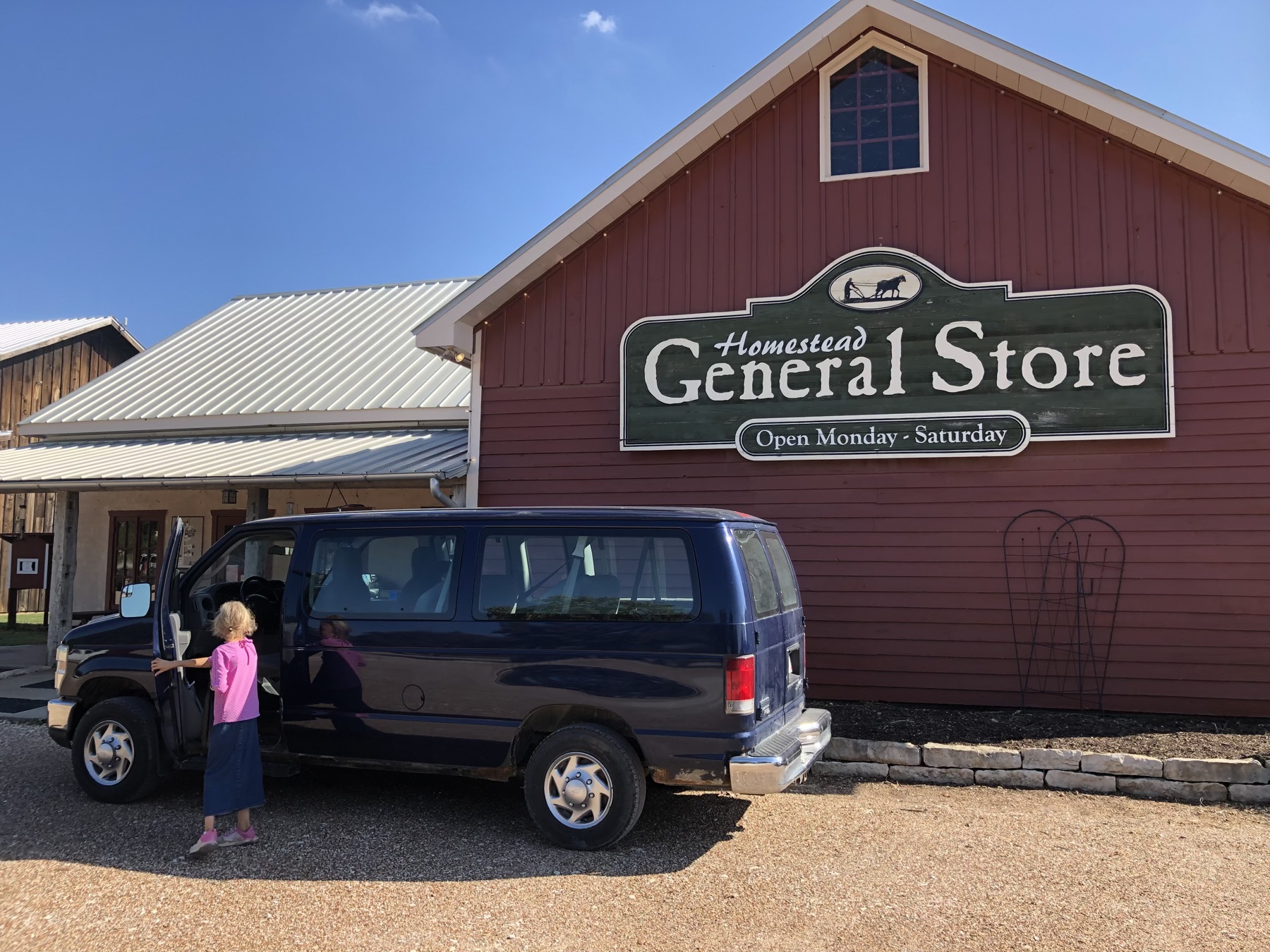
“The church cannot ignore economy,” says Asahel Adams, minister at Homestead Heritage, an agrarian intentional community near Waco, Texas, with sister congregations all over the world. “We cannot view economy as a secular dimension but as a Kingdom dimension . . . this is a spiritual problem.”
In his local congregation and elsewhere, the leadership tries to foster an environment conducive to family economy. “The church made a conscious decision to invest in something that would take a long time to become economically viable— because it was essential for our children and our fathers,” Asahel said. “The goal was never simply profit. The ambition was to bring fathers home.”
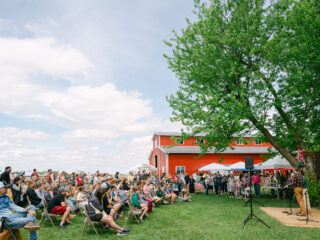
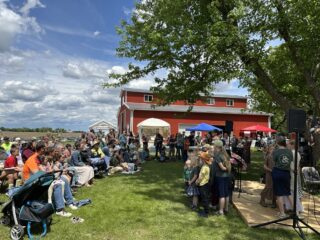
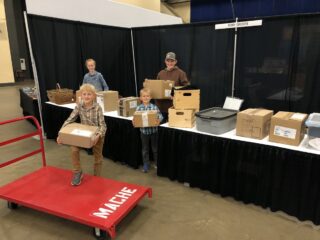
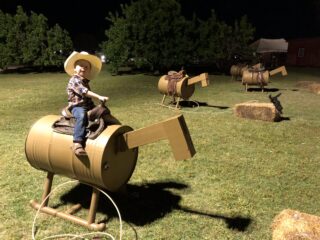
By way of example, Homestead Heritage recently built a 30,000-sqft event center on church property so they could host farmers’ markets and other events year-round that provide income for families. The Homestead Fair, 38-years strong, attracts tens of thousands of people annually. “Many businesses that now operate year-round began as fair projects,” Asahel recalled. “Teaching children for the fair often sparked permanent family enterprises.”
Asahel estimates that between the craft village, restaurants, B&Bs, coffee shops, grocery store, farm, and various shops on church property, family businesses gross north of $7 million annually—not including the numerous service- and trade-related businesses that operate offsite.
Thriving businesses mean jobs for adult members and apprenticeship for their children. But the chief purpose is not economic—it is discipleship. Asahel says that of the roughly 1,200 members in the Texas congregation there are very few who are not employed by, or alongside, other covenant members. “Every time you go to work, you’re entering a kingdom discipleship environment.”
Daniel Ralph, pastor of Christ Church Twin Cities, acknowledges that challenging times are ahead. “I’m not sure the American church has been sufficiently tested in the area of poverty,” he said. His church is looking into various avenues to prepare for economic hardship, including pairing younger families with retiring business owners. Rather than sell to hedge funds, the thinking goes, such owners could sell to families within the church and provide employment opportunities for many. “This is how covenant people should operate: not producing for themselves [alone], but for community,” he says. “Sow the seeds that another generation will benefit from.”
Daniel also reminds us that our prospects may not be as bleak as they seem. “Don’t look at the waves, look at the tide,” he says. “God may not spare us from pain, but he will see us through.”
The silver lining is that, in the end, God’s people will be strengthened. Churches that embrace a broader vision for economy and speak to the real needs of real people will flourish in the years ahead; they will create opportunities for their children to grow and work and start families of their own, all within the context of a distinctly Christian culture. Such churches will transcend the theological primping of our day and provide living, vibrant alternatives to the world’s failed promises. Churches that don’t will cease to exist.
This post was originally published in the Winter 2026 issue of The Grovestead Newsletter.